
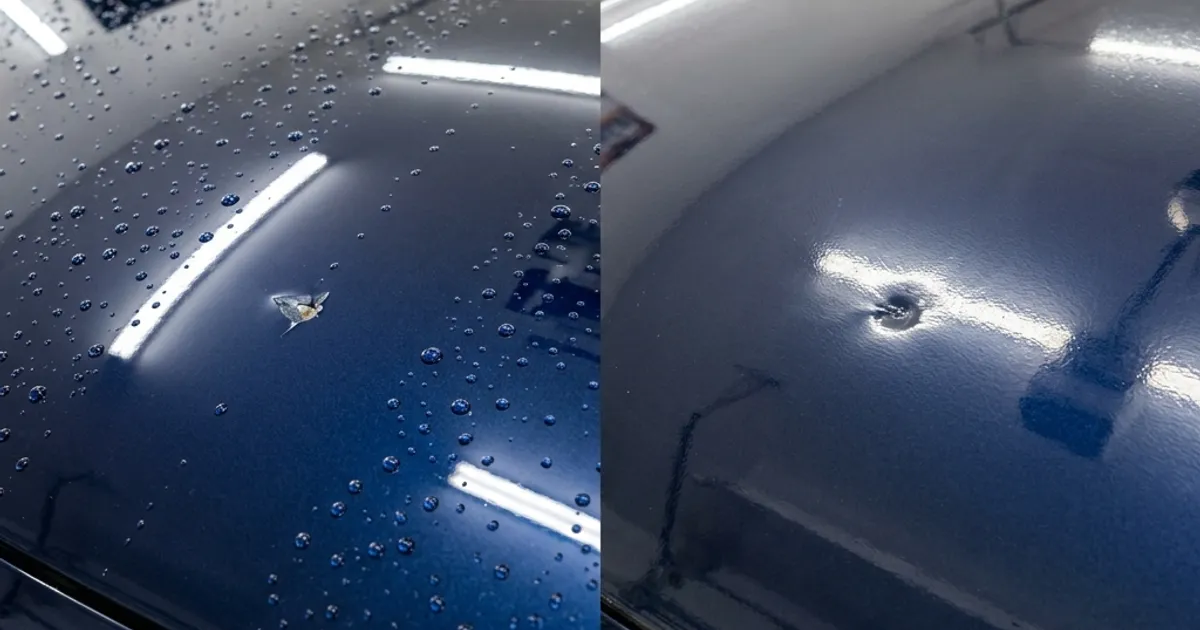
The 30-Second Answer
Ceramic coating and PPF are completely different products that solve different problems. They are not competitors — they are complements.
- Ceramic coating = chemical protection (UV, sap, bird droppings, brake dust, road tar) + hydrophobic surface. Does NOT stop physical damage.
- PPF = physical protection (rock chips, scratches, light impacts). Modern PPF is also hydrophobic but the chemical protection is secondary.
For most enthusiast owners, the right answer is BOTH: PPF on the high-impact areas (front bumper, hood, fenders, mirrors) and ceramic coating layered over the entire car (including over the PPF itself).
What Ceramic Coating Protects Against
Ceramic coating is a thin (1-3 micron) sacrificial chemical layer applied to your clear coat. It is excellent at:
- UV protection — slows clear coat oxidation and fading.
- Chemical resistance — bird droppings, tree sap, bug splatter, brake dust, road tar all wipe off cleanly instead of etching.
- Hydrophobicity — water beads and sheets off, taking dirt with it. Wash time drops dramatically.
- Gloss enhancement — adds depth and a "glassy" finish to the paint.
- Easier washing — fewer products needed, less risk of swirl marks during wash.
It is NOT good at:
- Stopping rock chips (too thin).
- Stopping scratches (the "9H" claim is misleading).
- Hiding existing paint defects (it locks them in).
What PPF Protects Against
Paint protection film is a thick (6-8 mil) urethane film applied to the surface of your paint. It is excellent at:
- Stone chip prevention — the only product that physically blocks rocks.
- Light scratches — surface scratches in the film can self-heal with heat.
- Track day damage — small impacts and debris that would chip a bare panel.
- Door dings on door edges — when wrapped over the edge.
- Bug etching from insect impact — the film absorbs the chemistry instead of the paint.
Modern premium PPF brands (XPEL Ultimate Plus, STEK DYNOshield, SunTek Reaction) also include hydrophobic top coats that approach ceramic coating performance for chemical protection.
The Hybrid Approach (Best of Both)
The gold-standard protection package combines both products:
1. PPF on the high-impact panels: front bumper, full hood, full fenders, mirror caps, A-pillars, sometimes headlights.
2. Ceramic coating over the rest of the car: doors, quarters, roof, trunk.
3. Ceramic coating layered ON TOP of the PPF as well, for added chemical resistance and hydrophobic properties.
This setup gives you physical protection where 80% of damage happens (the front of the car), chemical protection on every panel, and the easiest washing experience available.
Get free quotes from certified installers in your area
Compare prices and find the right installer for your vehicle.
Get Free Quotes →When to Choose Ceramic Only
- Garaged daily driver, low-speed urban driving, no highway commute.
- Older car where PPF cost is disproportionate to vehicle value.
- Owner who is mostly worried about gloss, ease of washing and chemical etching, not rock chips.
- Tight budget — coating is half to a third the cost of a hybrid setup.
When to Choose PPF Only
- Track day / autocross car where rock chip risk is the dominant concern.
- Heavy gravel-road or construction-zone driving.
- Owner who does not care about hydrophobic effect or wash time.
Note: most premium PPFs now include a hydrophobic topcoat, so PPF-only setups still get some of the chemical resistance benefit.
When to Choose Both
- Highway commute or long-distance driving — front-end PPF is essential.
- New car where you want maximum long-term protection.
- Exotic, luxury or high-value vehicle where the asset justifies full coverage.
- Owner who cares about both rock chip prevention AND ease of maintenance.
For most enthusiast owners, "both" is the right answer.
Cost Comparison by Scenario
- Ceramic only (sedan): $800-$2,000.
- Ceramic only (SUV/truck): $1,200-$3,000.
- Front-end PPF only (sedan): $1,500-$3,500.
- Front-end PPF only (SUV/truck): $2,000-$4,500.
- Hybrid (front PPF + full ceramic, sedan): $2,500-$5,000.
- Hybrid (front PPF + full ceramic, SUV/truck): $3,500-$7,500.
- Full-body PPF + ceramic (any vehicle): $7,000-$15,000+.