
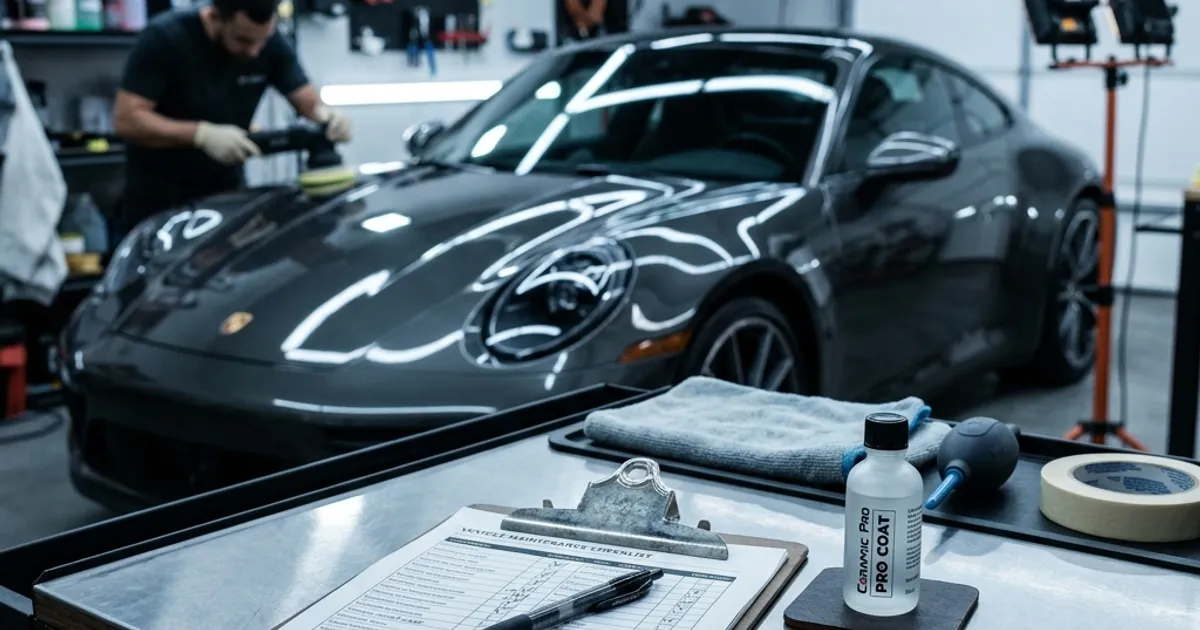
The Documented-Maintenance Rule
Almost every premium ceramic coating and PPF warranty requires you to perform — and document — regular maintenance. The exact requirements vary by brand, but the common thread is: regular washing with manufacturer-approved products, no automatic washes, and (for ceramic) periodic professional inspection.
A warranty is not a promise of coverage; it is a contract. Failing to follow the maintenance schedule gives the manufacturer grounds to deny a claim, even if the failure was their fault. Document everything.
What Typically Voids a Warranty
- Use of automatic brush car washes (universally voids almost every coating warranty).
- Use of harsh chemicals: dish soap, all-purpose cleaners, glass cleaner with ammonia, harsh wheel cleaners.
- Failure to perform required annual or semi-annual professional inspection (Ceramic Pro, especially).
- Application of unauthorized products on top of the coating (waxes, sealants, off-brand boosters).
- Damage from accident, vandalism, paint correction, or any work done by a non-certified shop.
- For PPF: damage from improper removal, paint defects underneath the film, or solvents used during install.
Brand-Specific Requirements (Brief)
- Ceramic Pro: annual inspection at an authorized dealer is required to maintain the lifetime package. The dealer documents the inspection and reports it to Ceramic Pro corporate.
- XPEL: PPF carries a 10-year warranty against yellowing, cracking, peeling, bubbling and delamination. Maintenance requires regular washing per the published guide.
- STEK: 10-year DYNOshield warranty requires regular pH-neutral washing and prohibits automatic brush washes.
- SunTek: 12-year Reaction warranty has similar requirements.
- Gtechniq: warranty length varies by product; all require regular professional maintenance.
- Always read your specific warranty document — these are summaries, not legal terms.
Get free quotes from certified installers in your area
Compare prices and find the right installer for your vehicle.
Get Free Quotes →How to Document Your Maintenance
Keep a simple folder (digital or physical) with:
- Date of every wash, with a photo of the car after.
- Receipts and product names for every shampoo, booster or maintenance product used.
- Receipts and reports from every professional inspection or service.
- The original installation invoice and warranty document.
The goal is to be able to prove, if needed, that you followed the manufacturer guidelines. This is the single most important thing you can do to protect your investment.
When to Go Back to Your Installer
Go back to your installer for:
- Any visible coating failure (streaks, dead spots, lost hydrophobicity that a booster cannot fix).
- PPF edge lifting that does not resolve in the first few weeks.
- Annual inspections required by your warranty.
- Decontamination, paint correction, or any service that touches the coating itself.
Do NOT take a coated car to a non-certified shop for any maintenance work. Even well-meaning detailers can void your warranty by using the wrong product or technique.
When DIY Maintenance Is Fine
You absolutely can do most regular maintenance yourself: weekly rinses, biweekly two-bucket washes, occasional booster sprays. These are explicitly designed to be DIY-friendly and using them does not void any warranty.
The line is when you start touching the coating itself with abrasive products (polish, compound, clay bar, iron remover at high concentration). Anything that could remove or damage the coating layer should be done by your installer.